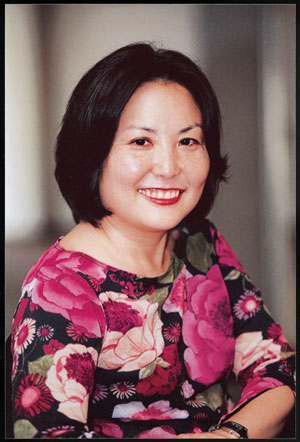
Naomi Hirahara writes:
Fifteen years. Fifteen bloody years. It took that much time for a seed of a novel to germinate, grow, and be mowed down over and over again. I finally became a debut novelist at the age of forty-one.
Granted, I had a whopper of a story. A Japanese American atomic-bomb survivor who must confront the truths of what happened to him in Hiroshima. Its early incarnation was in the form of a thriller: a nuclear disaster in Los Angeles would cripple the city. Our future would rest on those who had battled extreme circumstances daily, the homeless, and atomic bomb survivors, who had experienced radioactive fallout before. (Newly graduated from college, I was an idealistic reporter at the time, what can I say?)
But the prose was leaden, the characters cardboard, the situation incongruous. I scrapped it and started to narrow the focus. Now I attempted a more literary book just about the survivor and his relationship with a doctor in Hiroshima who comes to L.A. to conduct medical examinations. The titles changed over time, too. From Inky Fingers (horrible!) to L.A. Shakes to The Handicapper to Broken Branches. I took classes at UCLA Writers’ Extension. I read chapters to two other women writers on a small, rickety houseboat in the Marina. Like a crazed emergency doctor with a patient that had one surgery too many, I was determined to bring my manuscript to life.
After twelve years working on the book at night while I toiling as a reporter, flack (p.r. executive), and finally an editor, I decided that I needed to go for broke. I applied for a writing fellowship in Wichita, Kansas, which would provide me with a small stipend for nine months as I recrafted my novel. I applied and got in. I would leave my career as an editor, my newly purchased townhome, and my boyfriend for the Midwest. My Japanese American colleagues and friends thought I was insane. They gave me gallons of soy sauce and ramen noodles and sent me on my way. (I, of course, quickly learned that they have soy sauce in Kansas. As my Texas fellowship partner would say, “gobs” of it. A ton of Vietnamese Pho noodle eateries. Eight Asian grocery stores. A Japanese restaurant named “Mama-san.” The list goes on.)
After nine months, I had a retooled manuscript. I resent it to a small press in the Midwest. Still no dice. They found the prose “flat,” they said. Returning to L.A., I snagged a job doing a biography of a Japanese American business entrepreneur for a museum, thereby launching my new career producing nonfiction books for individuals and organizations. In between this work, I completely revised the manuscript again, removing the doctor character, and as a result, half of the book. Now the main character and gardener, Mas Arai, would be on his own. To push the momentum of the story, I wove in a crime that occurred in Hiroshima in 1945. The title of the book had changed to Summer of the Big Bachi, and that’s when my husband (yes, the romance survived the distance between Kansas and L.A.) said the voice of the book finally did come to life.
By the time I had an agent, New York publishing contract, and finally a published mystery novel in 2004, I had already published four nonfiction books since returning from my writing fellowship.
I could go on and tell you how I found my agent and how we negotiated the contract with Bantam, but it is really incidental to the focus of this story. The only element you can control in this publishing business is your writing. It will not take most people fifteen years to get their first books published, but it may take more than they bargained for.
Naomi Hirahara is the author of the Mas Arai mystery series. Her first book, Summer of the Big Bachi, was a Macavity Award nominee for best first novel and included in Publishers Weekly’s list of best books of 2004. Gasa-Gasa Girl, released this year, was on the Southern California Booksellers’ Association’s bestseller list. The third in the series, Snakeskin Shamisen, will be released in April 2006.
